Conceptualism is actually a more well-understood philosophy than most would think. Commonly expressed through art and architecture, typical works of this field are often categorised by bold and sometimes extravagant design statements which resonate in the mind, provoking thought and debate. Design with conceptualism as a driving ethos pushes the boundaries of what is physically and mentally achievable. It strives to prompt other forward-thinking minds as well as educating those less well-informed to help celebrate and raise appreciation of these disciplines. However, the importance of conceptualism and the role it plays is, in my opinion, both undervalued and underappreciated; most people know of, or have witnessed conceptualist works in some manner, but few will recognise the need for more such endeavours.
Conceptualism thrives in the fields of art and architecture, and is a well-established catalyst of growth in the industry. Few buildings in the public eye today are devoid of a tangible narrative or meaning which drives its being – through form or function. Similarly, conceptual art is a flourishing discipline amongst contemporaries and is probably the most welcomed and celebrated medium.
Landscape architecture and garden design however, don’t quite hold the same level of devotion to such thought provoking ideas. Conceptualism is present in pockets throughout the discipline, but is by no means omnipresent as it is across art and architecture. I think that garden enthusiasts don’t really subscribe or whole heartedly believe in conceptualism as a driving force in the creation of outdoor spaces, but instead perceive gardens as a calming venue or backdrop that plays host to, or pulls together a number of conceptual pieces of art or architecture.
There is, at least, a presence of intelligent conceptual thinking in public landscape design. Conceptualism in landscape is intrinsically linked with the context of a site. Widely recognised as being important by project sponsors, councils and the public alike, the design concept should, and usually does, form the central axis from which all decisions in the design process are verified against. Projects are commissioned to create place, place with a sense of context, place which belongs to a vernacular. Conceptual design is one of the most efficient methods of delivering this, and there is no shortage of successful examples. Martha Schwartz is one of the most formidable authors of conceptual landscape; her work is characterised by bold statements which leave viewers in awe, dividing opinion and encouraging debate.
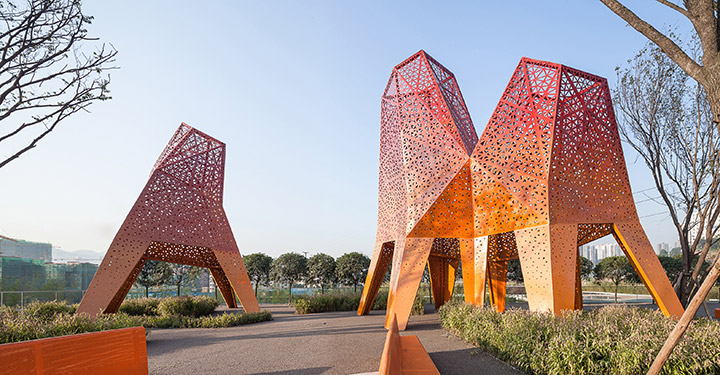
This public park is defined by large abstract steel structures, which create a connection between the park and the backdrop landscape of the mountains, peaks and valleys of the Sichuan Basin. The structures create a landmark and signify the existence of place, easily recognisable from afar.The image leads me deliberately onto the root of the debate at hand; why isn’t conceptualism more celebrated in private gardens? Look at the image. The structures are iconic, dramatic and majestic – but can you picture one in your back garden? No? Crude example, I know – but you start to get the point.
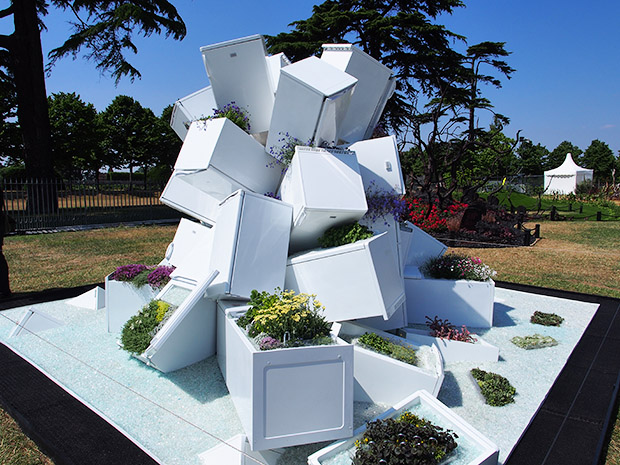
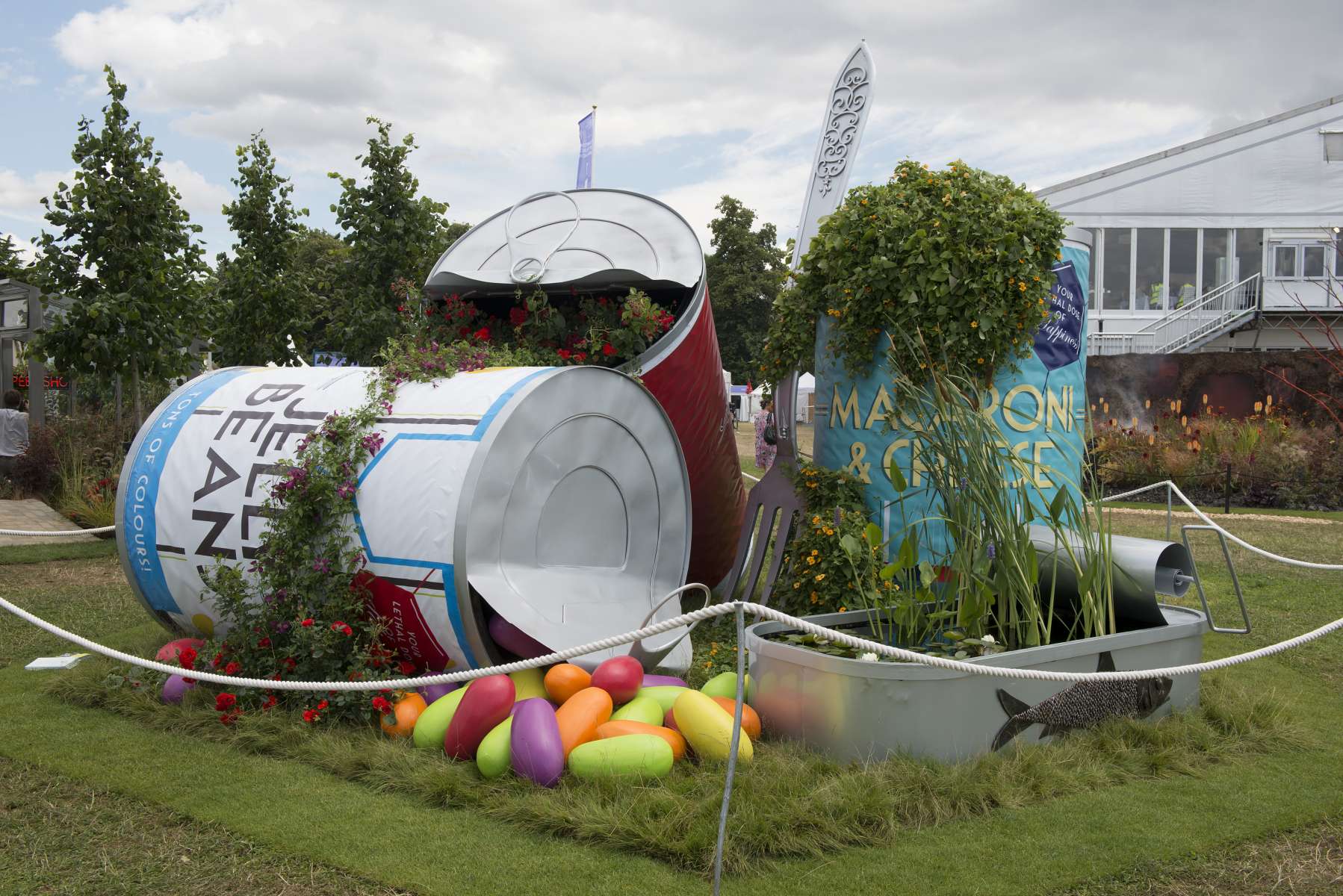
I don’t think garden designers have really cracked the formula for translating larger scale conceptual thinking and motive to the private residential scale. It’s not being sold enough to clients, and there is certainly little temptation or encouragement from gardens in the eye of the media (I refer to the below). I fear this kind of image is one the mind conjures up when it hears the words ‘conceptual’ and ‘garden’ in the same sentence.
It seems that once a space is bounded on four sides, the relevance of concept seems to get left outside to peek over the fence. Context, locality and sense of place are all factors we consider greatly when planning a space, but I think we have a new opportunity. The aforementioned four boundaries that once presented a problem, are presenting a solution in the same breath. Garden walls, fences and hedges often weaken the relationship between a garden and its surrounding landscape, disconnecting the space from its context. This isolated box provides opportunity of separation and containment from the outer landscape, allowing designers to be more outspoken with design, creating edgier and more unique gardens that perhaps have a greater affinity with the person who it belongs to, rather than the place it is in.
Good conceptual design doesn’t have to be overly literal either. The concept should however underpin the entire decision making and thought process, resulting in a coherence of form, function and content. Stories can be narrated and references can be made through the use of unbiased materials which are commonly used across non-conceptual garden design. There is no specific plant palette or material language that differentiates conceptualism from non-conceptualism. The cleverest conceptual design often disguises its true representation through the use of common building products and plant species, resulting in a more satisfyingly quiet narration. It creates a garden which is just as pleasing at the aesthetic level as it is on a philosophical one.
This rooftop garden in Chelsea was conceptually developed with the strong connection to the sky-scape in mind. Being elevated so high above London’s skyline, a rare opportunity for uninterrupted sky views presented itself. ‘Cloud pruned’ trees and hedges were used throughout the garden with many of the structural forms deriving from the perfectly spherical nature of the planets held within our solar system, and a colour palette of whites and blues heightened the feeling of being up in the clouds. Long illuminated strips of Corian link the garden to its surrounding context of canal networks around the buildings themselves.
One might however question what the perceptible benefits are to clients willing to commission such works. I think the value of this type of design can only really be measured in the eyes and mind of the beholder. I think conceptual gardens of this nature should be very personal and unique to the owner for the investment to hold any true value – it may be a special place they hold close to their heart, or a centrepiece they wish to show off to friends and family. The benefits to the industry are far more quantifiable; conceptualism pushes boundaries and constantly brings us new methods, materials and mentalities to the act of garden making; it is the way forward. What we are seeing as common ground in today’s design industry was yesterday’s conceptual dream – so naturally, we must plan for tomorrow.
We need to be seeing more conceptually driven gardens which inspire and enthral. Moreover, we as garden designers and landscape architects need more custodians and curators who are willing to allow designers to dream up the slightly more obscure, the outlandish or the one of a kind for their own backyard. People who can put their trust and faith in their designer to come up with something innovative and outside the box which has a true meaning or story behind it – a reason for being, beyond the aesthetic. So if this message reaches anyone planning a garden project, we need you!
By Alastair Henderson, Aralia
Photos from left to right: Fengming Mountain Park by Martha Schwartz Partners. Image: © Martha Schwartz Partners, RHS Hampton Court Conceptual Gardens. Images (left to right): © Urban 75, © Weholite.co.uk, Copyright St George PLC – 3D Visuals of Aralia’s new project, Chelsea Creek