“A Piece of Architectural History? Aralia tackle the restoration of a lost country estate on the heart of the Essex Greenbelt”
Aralia was appointed in collaboration with Clear architects to reinstate a piece of architectural history within a belt of protected woodland. Debden Hall in Loughton was a prominent country estate in its day in the 18th Century, boasting a larger Georgian mansion with beautifully landscaped grounds. Today it is all but lost with only the original grade II listed gates and original driveway tree avenue as proof of its existence.
The original Debden Hall country estate was designed by the infamous architect Henry Holland, a very prominent figure whose clients consisted of the very highest English nobility. Due to historic references to Holland’s personal and professional relationship with Lancelot ‘Capability’ Brown, it is reasonable to believe that the Debden Hall country estate would have been designed with Brown, or at the very least would have been influenced by his landscape ethos. The new proposed Debden Hall uses these two historic figures to create a new layer of history with subtle hints to what was by restoring lost feature.
Brown’s work was a stark contrast to the more formal gardens of Versailles. His designs embodied natural simplicity in comfort and elegance, and he was determined to create practical landscapes that were aesthetically pleasing. He strived to blur the boundaries between country estates and the wider landscape, while bearing in mind advancements in other industries. He created large encircling driveways that could accommodate faster and larger carriages, to take the visitor on a journey around the estate – revealing views along the way.
Characteristic features of Brown landscapes included bridges, cascades, meadows and follies, his style took a more minimalist approach with clusters of specimen trees and flowering shrubs. Lakes and driveways were iconic elements of a Brown Landscape both acting functionally and aesthetically. He worked to soften the natural undulations of the landscape creating sloped lawns that met the property and opened up views to the wider estate.
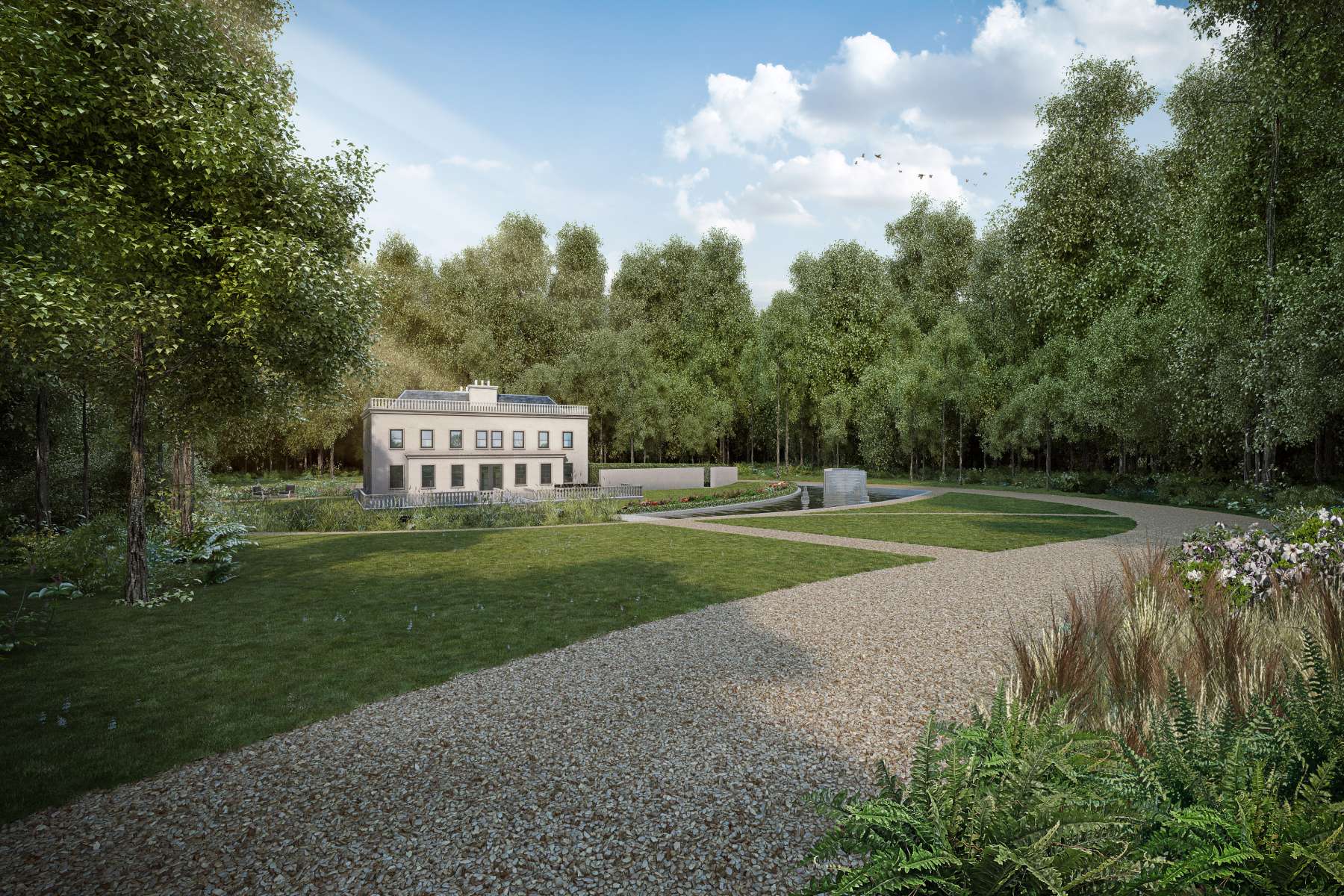
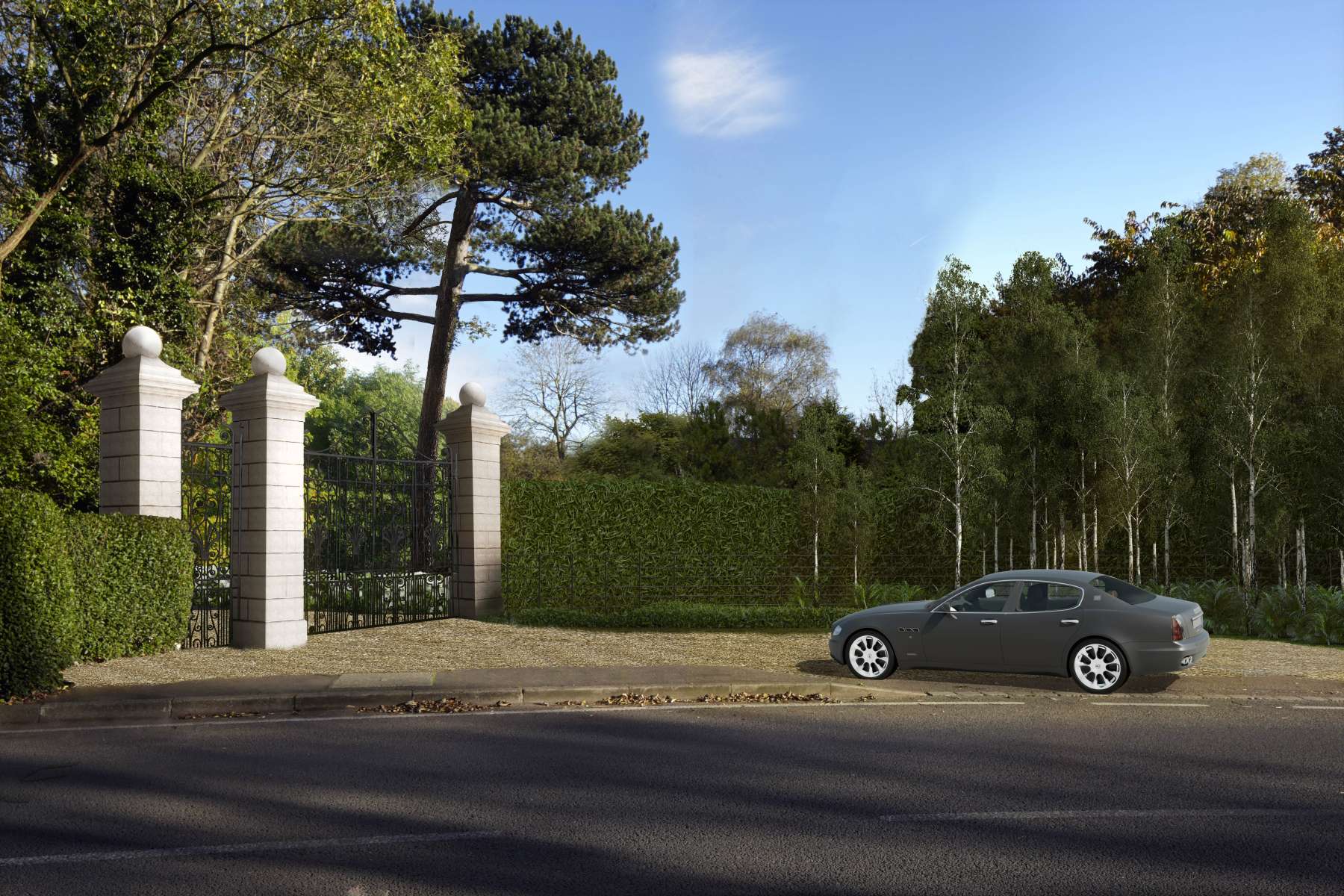
These principles have been carried through in the new design of Debden Hall along with sympathy for the current context, embracing the encroaching woodland setting to enhance its ecological and aesthetic value. The grade II listed ornamental gates will be restored and pinned back, creating a focus at the entrance to the site, which has been elegantly simplified to allude to the sites previous grandeur. The scheme will enhance the current condition of the woodland through implementation of a 10 year woodland strategy. Over the past few decades the site has been increasingly encroached upon by woodland species, as a result the original landscape of Debden Hall has been lost. The intention of the development is to reinstate the site as a typical English estate true to its heritage while taking careful consideration to maintain, develop and enhance the amenity and ecological value of the infringing woodland.
On arrival to the more private dwelling the traveller is met by a second set of gates and the landscape opens out to the estate, a reference to the original pleasure gardens. As with Browns landscapes the estate is gradually revealed upon arrival through sweeping drives and clusters of trees. The south facing garden now accommodates well-kept lawns, wildflowers and an elegant pond planted with marginals. The garden is completely encapsulated by woodland, reducing visual impact on neighbouring developments and strengthening ecological connections to the north and south areas of woodland. To the east of the property is a walled-in kitchen garden, buxus hedging lines the vegetable beds as they once would have. Parking facilities are discreetly placed at the north side of the property under the canopy of the woodland. A small footpath leads through the woodland to the northerly portion of the site where the original stream has been widened and enhanced, a water cascade is also reinstated to create a stunning secluded brook.
The current landscape of Debden Hall currently sits within an area of unmanaged secondary woodland, the former property has since been demolished and the development of Ripley View now replaces it. The secondary woodland that has established is in poor condition and overgrown, many trees with potential for historic and amenity value are becoming smothered due to a lack of woodland management. The disuse of the land and its secluded character has made it appealing to undesirables and anti-social behaviour, piles of litter and debris can be found throughout the grounds owing to fly tipping. Previous to the establishment of the secondary woodland the estate of Debden Hall was largely open grassland with some interesting landscape features that still exist today; the original Debden Hall gates are Grade II listed, though are in poor condition and will require repair. The gates open onto the historic driveway and horse chestnut avenue, however many of the trees are in poor condition and will require proper maintenance to restore the driveway and avenue to its former glory.
The New Debden Hall country estate is an incredibly fascinating and diverse project that will become a legacy for the local area creating ecological links to nearby Epping Forest. The project has so far been received well by local residence who are eager to see the once forgotten layers of history revealed and the disused land reinvigorated.
Visualisation by Clear Architects